


Understand the latest news, focus on industry trends, interpretation of professional encyclopedia
Bladeless fan quality control is essential for ensuring product safety, consistent performance, and reliable operation. For US importers, brand owners, and wholesale buyers, evaluating a manufacturer's testing procedures can help reduce product defects and improve supply chain reliability.
From electrical safety checks to motor aging tests and final inspections, a reliable quality control process should cover every critical production stage. Understanding these procedures also helps OEM/ODM buyers establish clear quality requirements before mass production.
At Gemjin, quality control is an important part of the manufacturing process. Buyers can learn more about Gemjin's quality control process and the inspection procedures used to support product consistency.
Bladeless fan quality control typically involves three stages: incoming material inspection, in-process quality control, and final product inspection.
Incoming Quality Control (IQC): Inspect motors, wiring, plastic components, power supplies, and other key materials against approved specifications.
In-Process Quality Control (IPQC): Check assembly accuracy, wiring connections, component fit, and workmanship during production.
Final Quality Control (FQC): Verify product functions, operating performance, appearance, accessories, and packaging before shipment.
For OEM/ODM projects, inspection criteria should be agreed upon before mass production. This helps ensure that the finished products match the approved sample and the buyer's technical requirements.
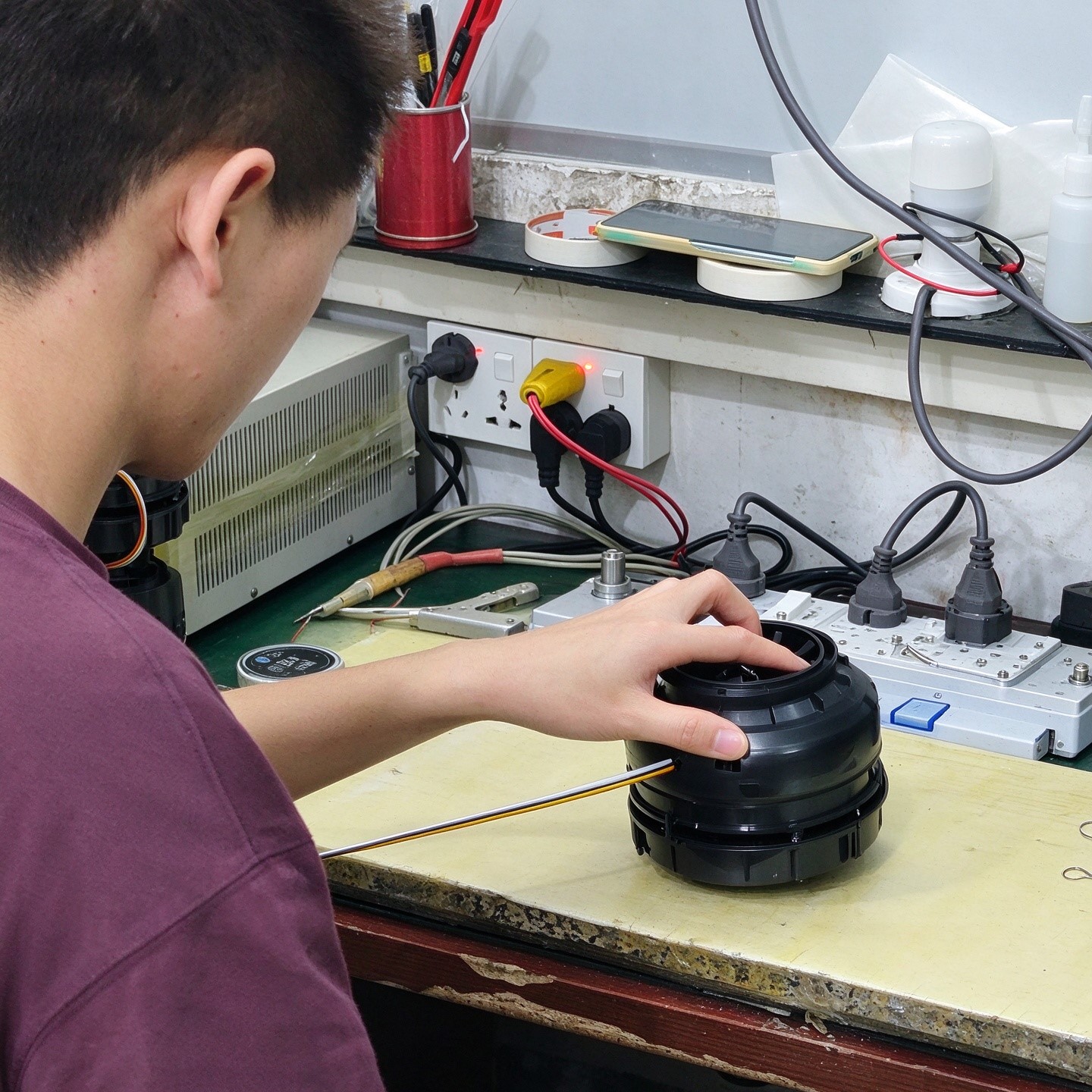 Electrical safety testing is a critical part of bladeless fan quality control. Depending on the product design and applicable requirements, factory checks may include insulation inspection, dielectric withstand testing, wiring verification, and electrical parameter measurements.
Power and current measurements help determine whether a fan operates within its specified electrical range. Inspectors should also check terminals, connectors, and internal wiring for secure connections and correct assembly.
For products intended for the US market, buyers should confirm which safety standards and certification requirements apply to their specific models. UL 507 covers many types of electric fans, but its scope and applicability must be evaluated for the actual product. A factory's internal electrical tests do not, by themselves, establish that a product is UL certified.
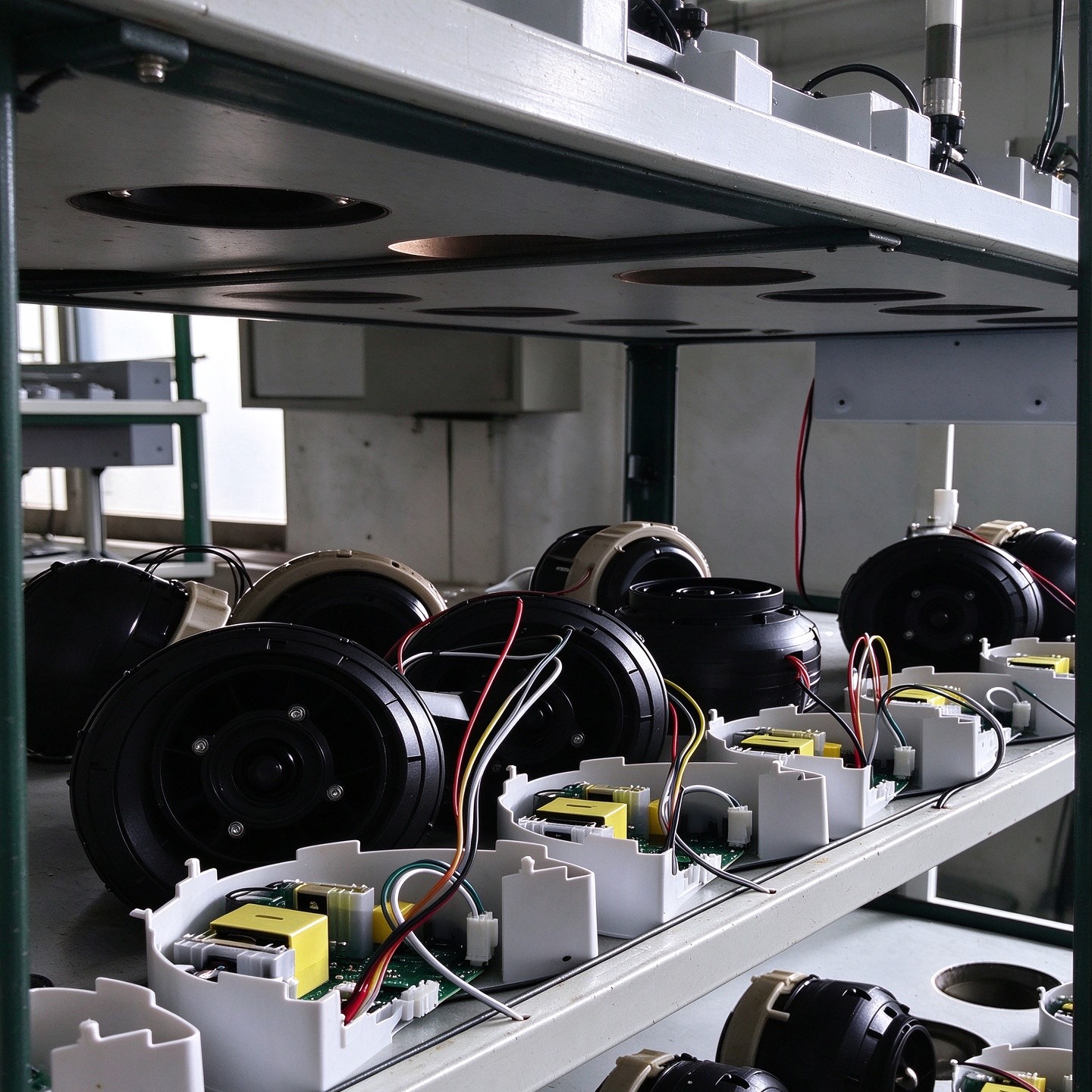 Motor aging tests help manufacturers identify certain early-stage failures before products leave the factory. During testing, motors or assembled components operate continuously under defined conditions while technicians monitor their performance.
Key observations may include:
Abnormal noise or vibration
Unusual temperature increases
Unexpected interruptions or shutdowns
Inconsistent operating performance
At Gemjin, each fan motor or core main unit undergoes a continuous two-hour aging test before delivery. This process helps identify potential issues before the components proceed to shipment.
However, a two-hour aging test does not guarantee a specific service life. Long-term reliability requires additional evaluation based on product design, operating conditions, and the buyer's requirements.
Motor aging is only one part of factory quality management. Buyers can also review Gemjin's manufacturing and production processes to better understand how production and inspection activities fit into the overall workflow.
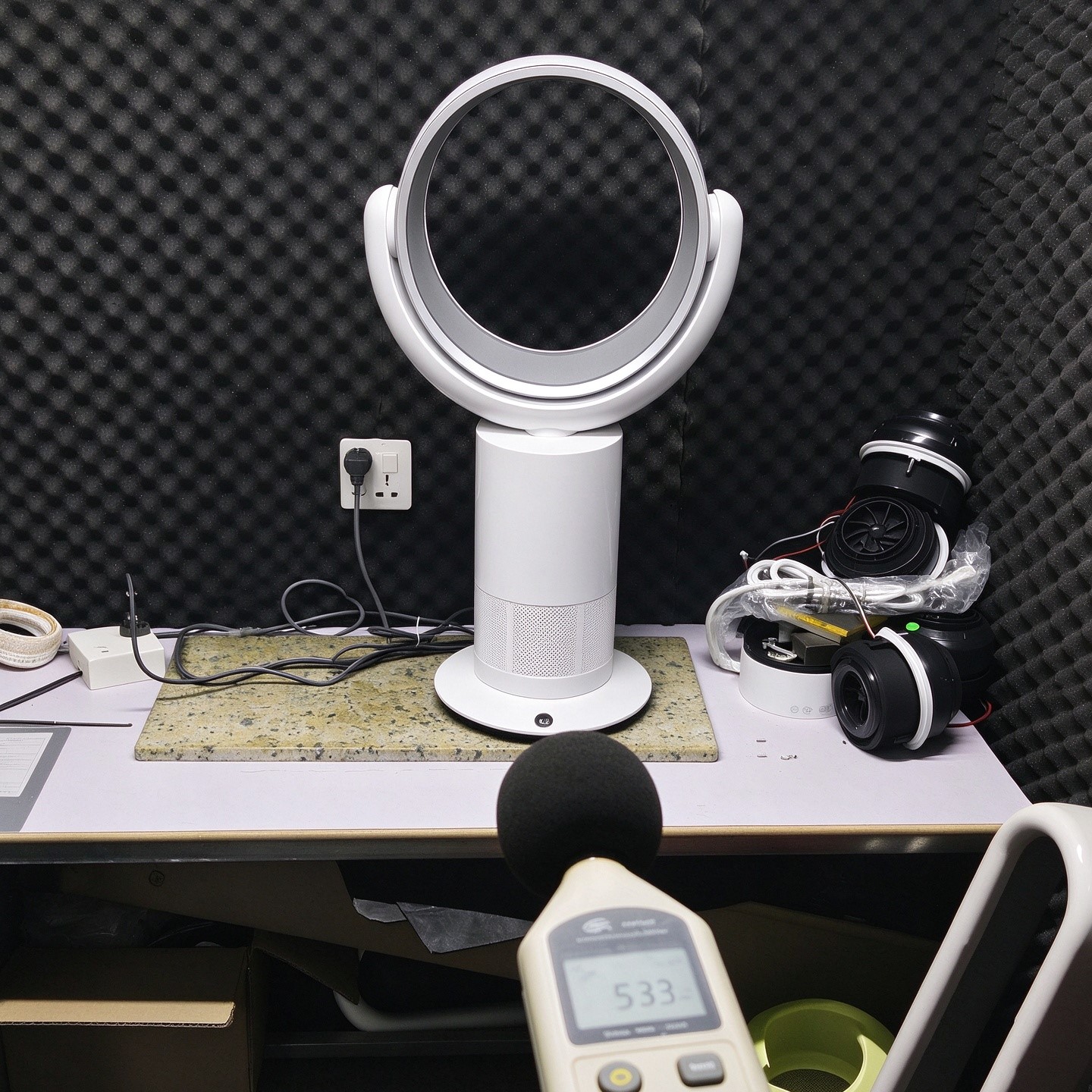 A bladeless fan must do more than turn on. Its airflow, noise level, and control functions should meet the agreed product specifications.
Airflow testing evaluates the fan's air delivery under defined operating conditions. Manufacturers should use consistent measurement procedures when comparing different units or verifying production samples.
Noise testing measures sound levels at specified distances, fan speeds, and environmental conditions. Recording the test setup makes results more useful for product development and quality comparisons.
Functional testing verifies the features included in the model, such as speed adjustment, oscillation, remote control, touch controls, and timer settings.
For Cool & Hot bladeless fans, additional checks should cover the PTC heating function, temperature control, and relevant protective features. Models equipped with plasma purification should also undergo appropriate checks of the purification module. Confirming that a function activates is not the same as verifying its air-cleaning effectiveness.
For standardized performance measurements, IEC 60879:2019, including its 2025 amendment, covers specified comfort fan types, including bladeless fans within its stated scope. Buyers should confirm whether the standard applies to their particular model and testing requirements.
Different bladeless fan models may require different performance checks depending on their design and intended use. Explore Gemjin's air cooling bladeless fans to learn more about the product options available for OEM/ODM projects.
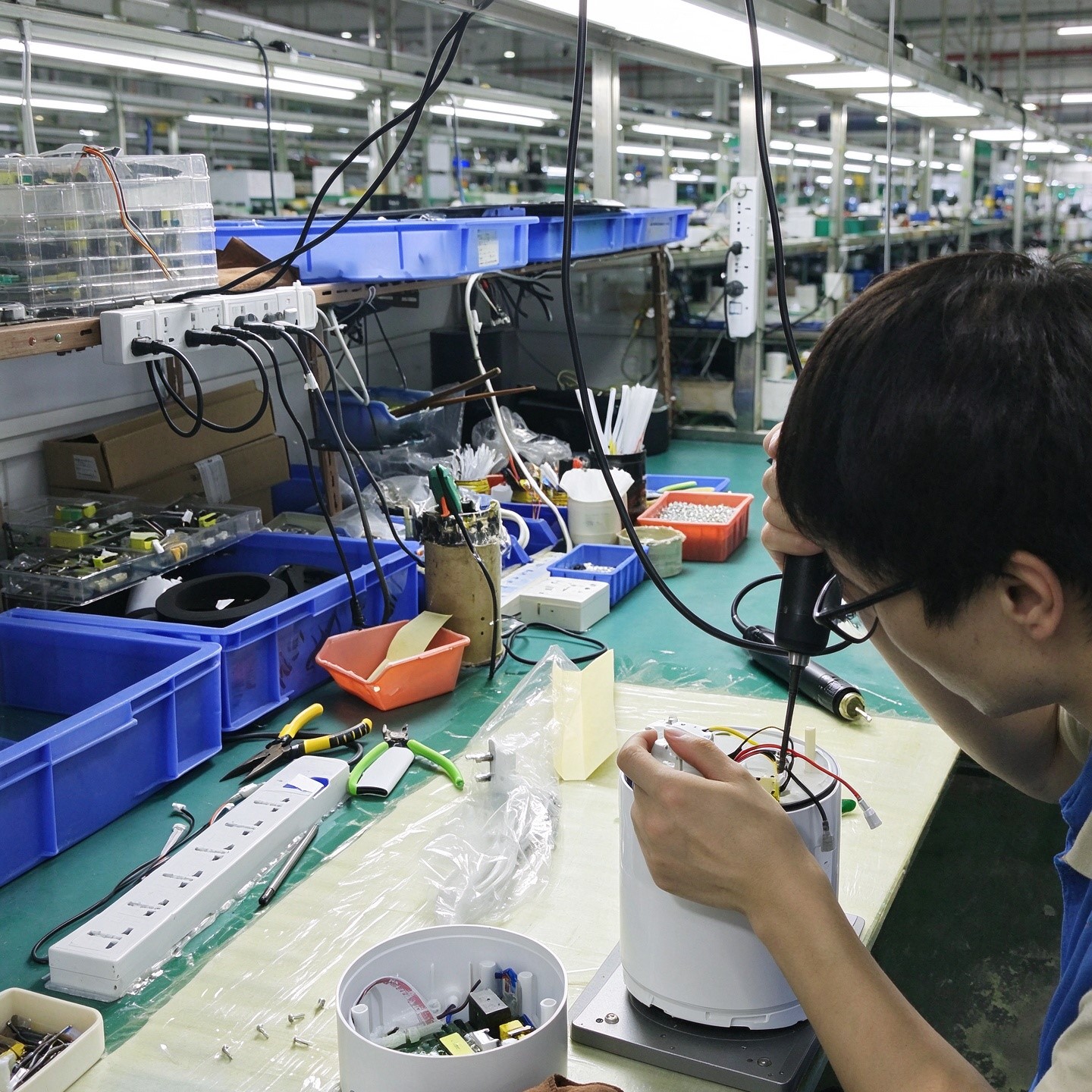 Mechanical and visual inspections help identify assembly defects that may affect product quality or the customer experience.
Factory inspectors should examine the housing, base stability, fasteners, assembly gaps, surface finish, buttons, and other external components. Where applicable, they should also verify that the tip-over automatic shut-off function operates correctly.
Transportation-related testing may include vibration or drop tests, depending on the packaging design, shipping conditions, and agreed acceptance criteria.
Before shipment, final inspection should confirm that the product matches the purchase order, including its model, color, accessories, labels, user manual, and packaging requirements. Any failed unit should be handled according to the factory's documented procedures rather than automatically approved for shipment.
For US buyers sourcing from China, evaluating a manufacturer's quality control system is just as important as comparing product prices.
Consider asking these questions before placing an OEM/ODM order:
What tests are performed? Request a list of electrical, motor, airflow, noise, and functional tests applicable to the selected model.
How often are tests conducted? Clarify whether checks apply to every unit, selected samples, or specific production batches.
Are test records available? Ask to review relevant inspection reports and understand how failed products are identified and handled.
Can the factory support customized requirements? Confirm whether specifications, approved samples, labeling, and inspection criteria can be agreed upon before production.
What compliance documents can be provided? Request applicable certificates and reports, and verify their scope, model coverage, and validity with the relevant certification body.
A reliable supplier should be able to explain its procedures clearly and provide evidence appropriate to the order. Claims such as “100% tested” or “certified quality” are more meaningful when supported by defined test criteria and traceable records.
Understanding the manufacturing process can also help buyers evaluate a supplier's quality control capabilities. Read the custom bladeless fan manufacturing process guide to learn more about the stages involved in developing and producing customized bladeless fans.
Effective bladeless fan quality control combines incoming material checks, in-process inspections, component aging tests, functional verification, and final shipment inspection. For OEM/ODM buyers, clear acceptance criteria and verifiable test records are essential to maintaining consistent product quality.
Gemjin supports factory-direct bladeless fan sourcing and OEM/ODM customization. US buyers can contact the team to discuss product specifications, testing requirements, and quality control arrangements for their projects.
Depending on its design and applicable requirements, a bladeless fan may undergo electrical safety checks, motor aging tests, airflow and noise measurements, functional verification, structural inspection, and packaging checks. The exact requirements should be defined for each model.
UL 507 covers many electric fan products, while other requirements may apply depending on the product's design and features. IEC 60879 provides performance measurement methods for specified comfort fans, including certain bladeless fan models. Buyers should confirm applicable standards and certification requirements with a qualified testing laboratory or certification body.
No. A two-hour aging test can help identify certain early failures, but it cannot establish a product's full service life. Long-term reliability requires additional testing and evaluation appropriate to the product and its intended use.

 86 13532762865
Online consultationalina1349@genjin.com
Hotline
+86 13532762865
7*24 hours service hotline